Colorado Climate Week Brought Hundreds for Opening Days: Highlights from Second Annual Climate Week
From March 30 – April 1, CSU Spur came alive as it hosted the opening days of the second annual Colorado Climate Week, in partnership with the Colorado Cleantech and the CSU Climate Hub. Over the course of three days, 176 speakers and hundreds of climate professionals, community members, artists, and researchers came together—not just to share ideas, but to build community around a shared sense of urgency and possibility.
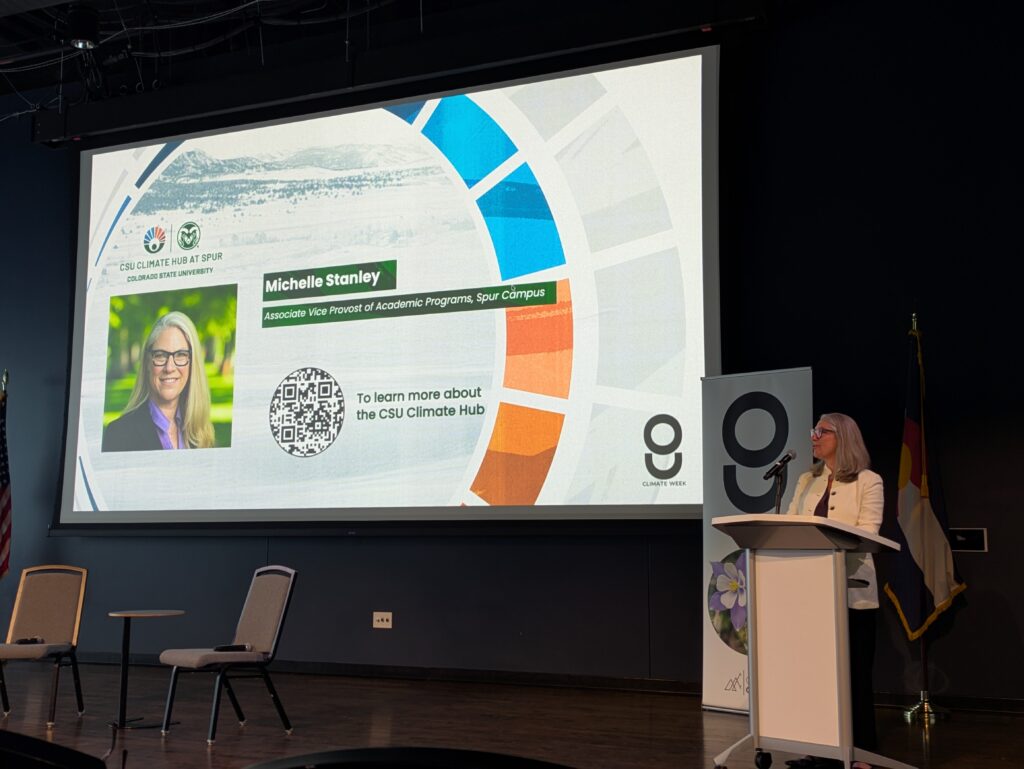
The week began with a welcome from Michelle Stanley, Chief Academic Officer at CSU Spur, who invited attendees onto our campus with a reminder of why gatherings like this matter.
Michelle Stanley opening Colorado Climate Week
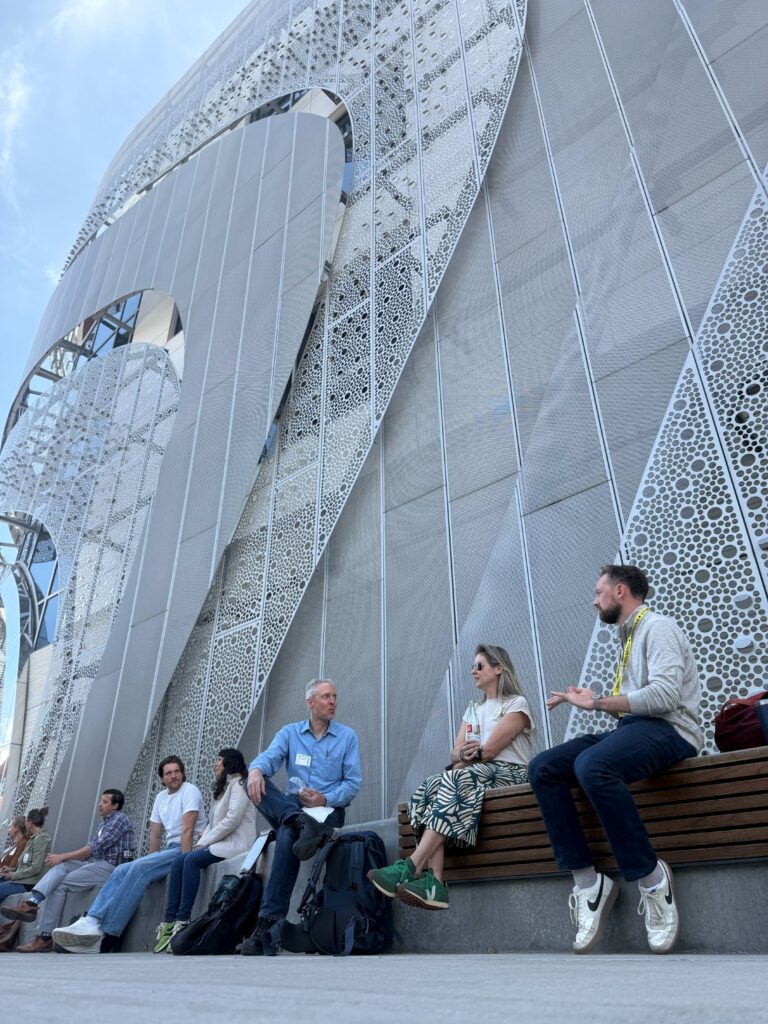
Attendees from Colorado Climate Week networking during a break
Here are some highlights of events organized by the Climate Hub
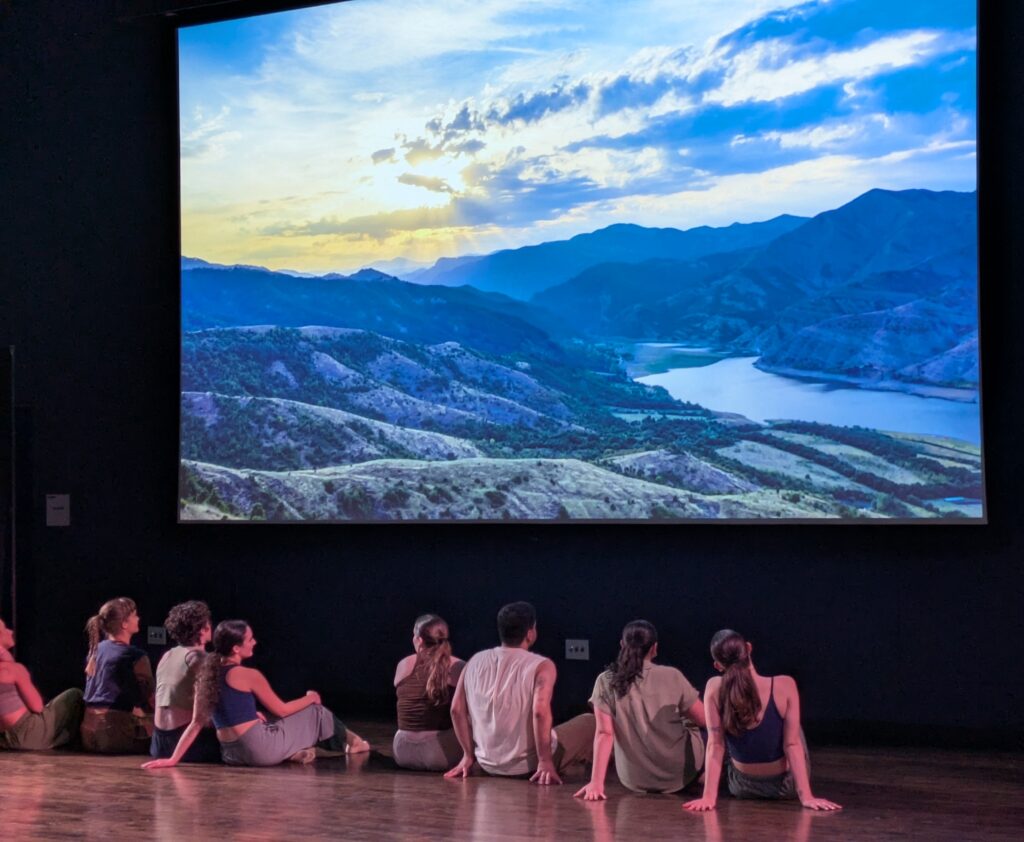
There is No Planet B Dance Performance
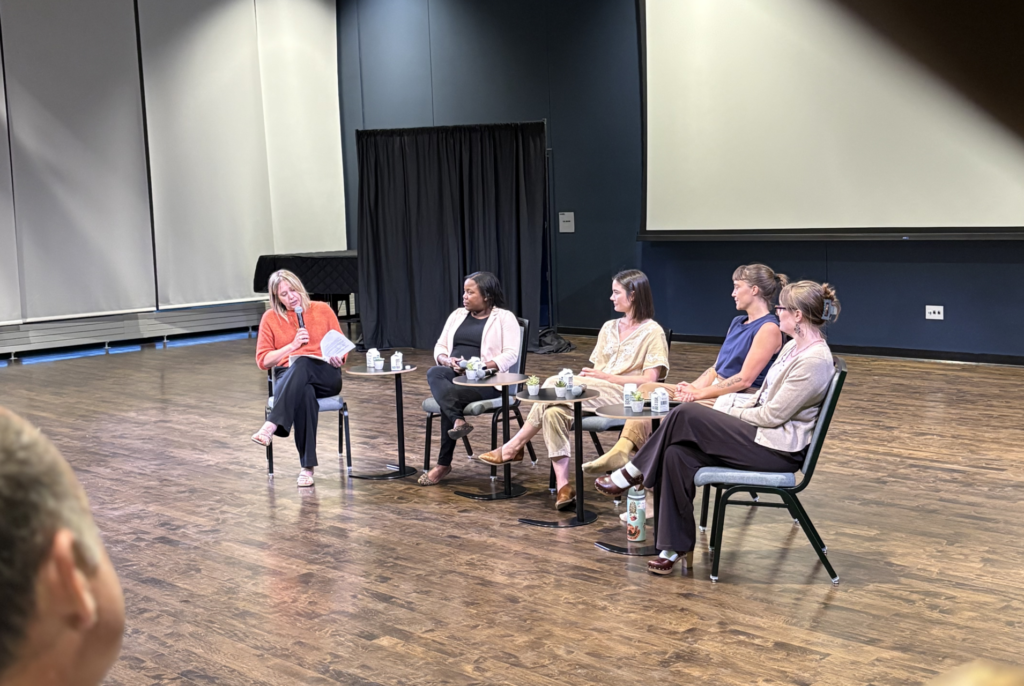
A photo gallery and dance performance led into a panel discussion that brought together both academics and artists and lingered with many long after it ended. Moderated by Courtney Schultz, our panelists Claire Kendall, Fiona Rose, Grace Gallagher, and Melissa Burt returned to a simple but often overlooked truth: science alone doesn’t move people—emotion does. If we want change, we have to engage both.
Panelists speaking after There is No Planet B Dance Performance
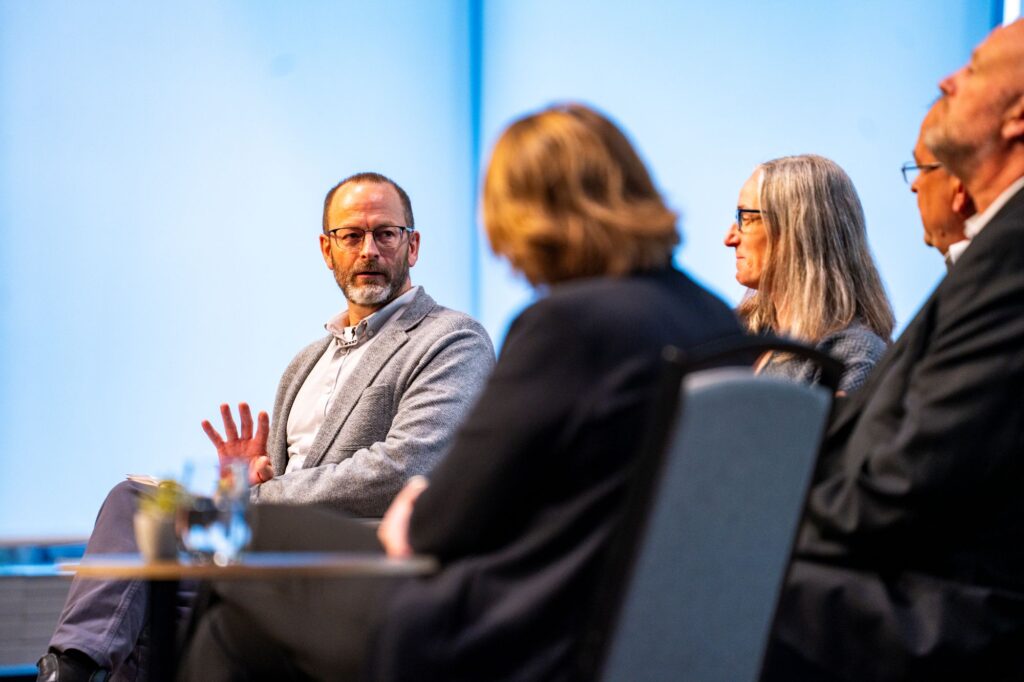
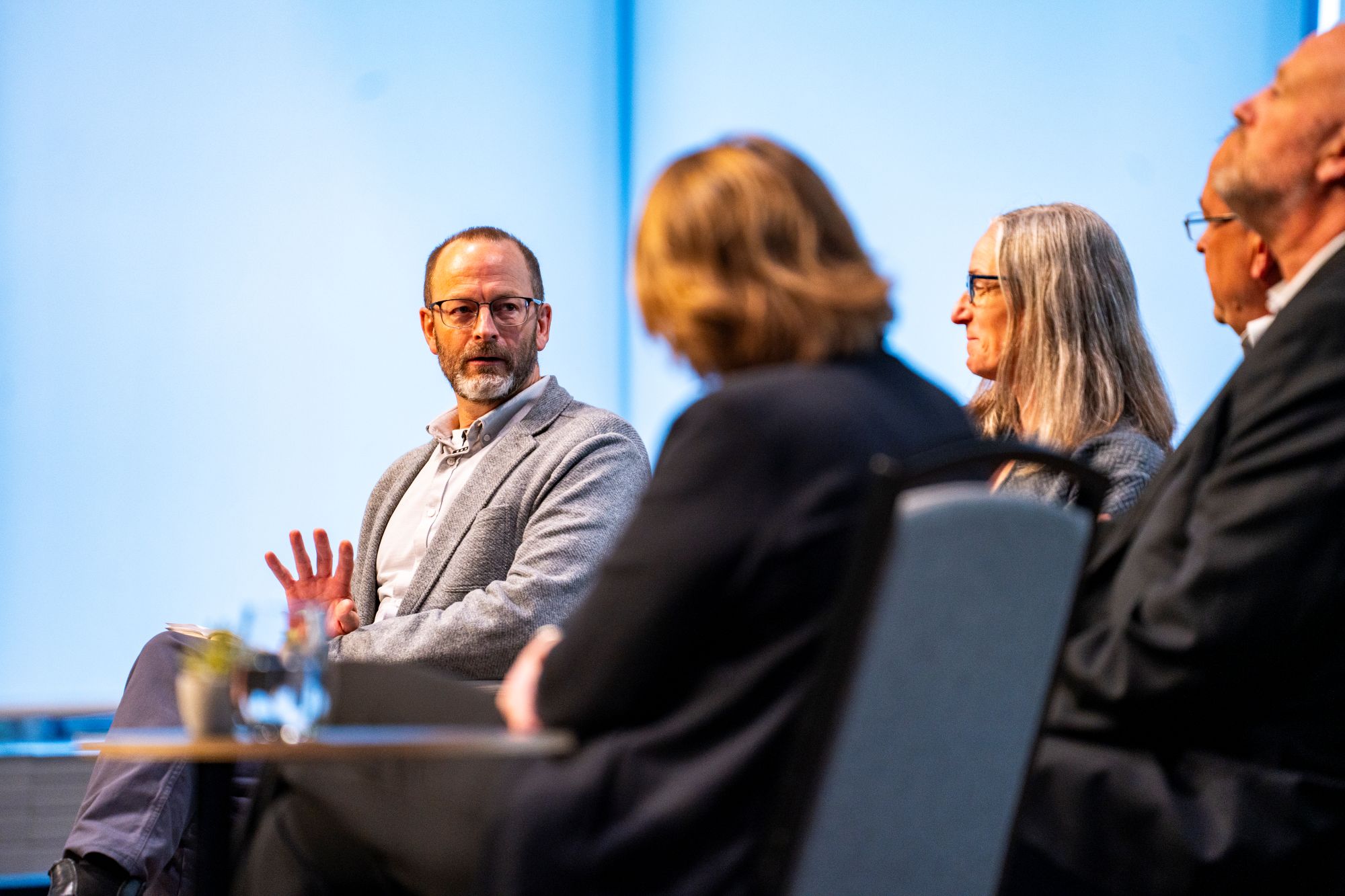
In another session, opened by Sasha Post from Outlier Projects, and facilitated CSU’s Ken Shockley, some of our nation’s leading climate intervention researchers including Brent Minchew, James Hurrell, Lisa Dilling, Megan Melamed, and Rich Conant explored approaches that not long ago might have seemed out of reach. Now, many are becoming viable if not critical areas of inquiry. We discussed carbon and methane capture, solar geoengineering, glacier stabilization, and more. The conversation carried a quiet undercurrent of realism, captured in one line that stuck with attendees: when everything goes sideways, you need a plan. We plan to continue this discussion, so stay tuned (and sign up for our updates at the subscribe button below)!
New Frontiers: Perspectives to Emerging Climate Innovations Panel Discussion
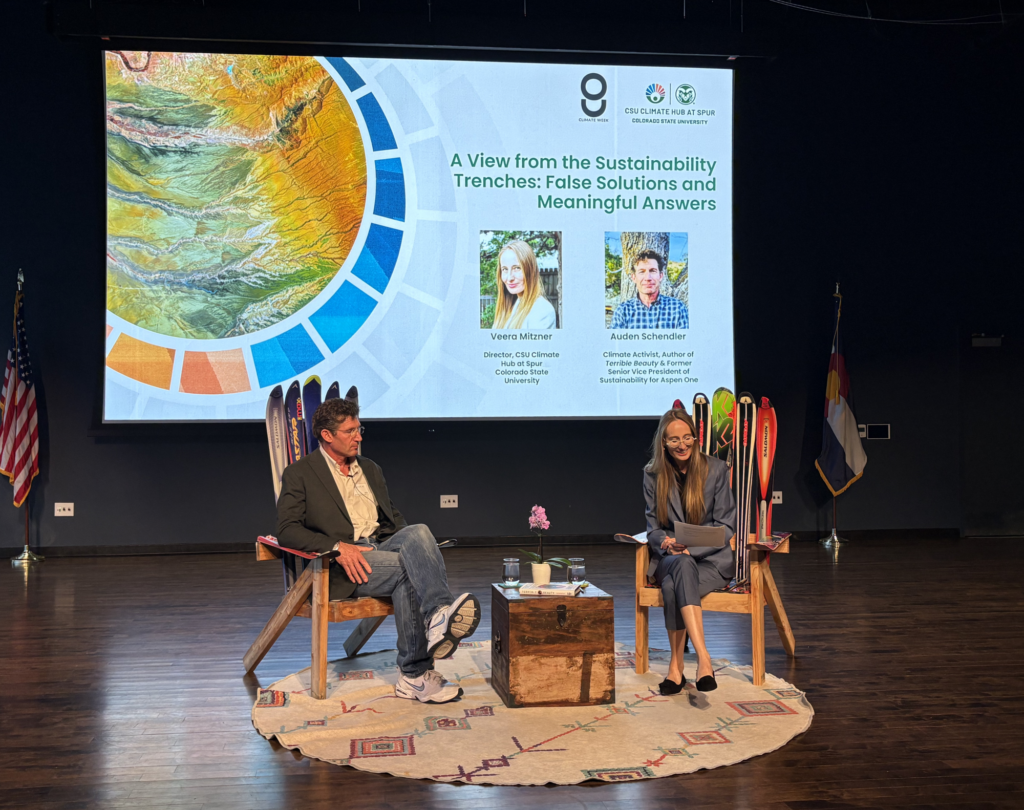
There was also a challenge which was direct and difficult to ignore. Auden Schendler called on businesses to look beyond incremental improvements within their own operations and instead use their influence to drive systemic change. Progress, he argued, depends on people willing to push—respectfully, but persistently—against the boundaries of what’s considered enough. He also signed copies of his book, Terrible Beauty: Reckoning with Climate Complicity and Rediscovering Our Soul.
A View from the Sustainability Trenches: False Solutions and Meaningful Answers with Auden Schendler
Throughout the week, another story unfolded just outside the session rooms. The traveling exhibit Resilient Earth, Resilient Communities, presented by NSF NCAR and UCAR, offered a grounded look at how communities across the country are experiencing weather impacts and responding in real time. It was a reminder that resilience is not abstract—it is built day by day, through observation, collaboration, and local action.
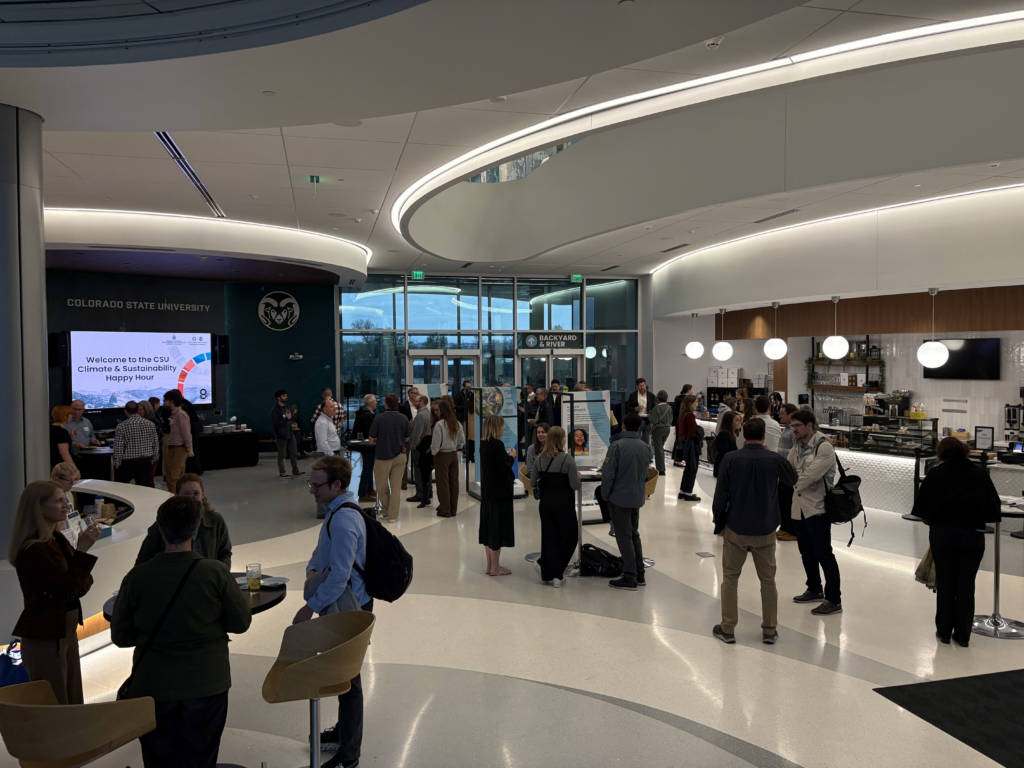
What is a climate week without the happy hours? We hosted two of them in the welcoming lobby of the CSU Spur Hydro building. Wednesday’s happy hour was a collaboration with CSU’s School of Global Environmental Sustainability and CSU Advancement and welcomed CSU alumni and our other friends in the Denver Metro area.
CSU Climate & Sustainability Happy Hour
By the end of the three days, what remained wasn’t just a list of takeaways. It was a feeling of momentum, connection, and a community that continues to grow.
To everyone who joined us—attendees, speakers, artists, and partners—thank you for being part of it. We are already looking forward to what we will build together next year.